

An A/B test is the closest most product teams get to a controlled experiment. Two variants, a population split, a metric watched. The trick is knowing what to test and what not to.
In plain language
In product and design, this term is part of the language teams use to plan, sketch, and refine what users actually see. An A/B test is the closest most product teams get to a controlled experiment. Two variants, a population split, a metric watched. The trick is knowing what to test and what not to. If you are new to the field, the simplest mental model is this: showing two versions to see which performs. Read it once with that frame in mind, then come back and read it again — that is usually enough for the rest of the entry to make sense.
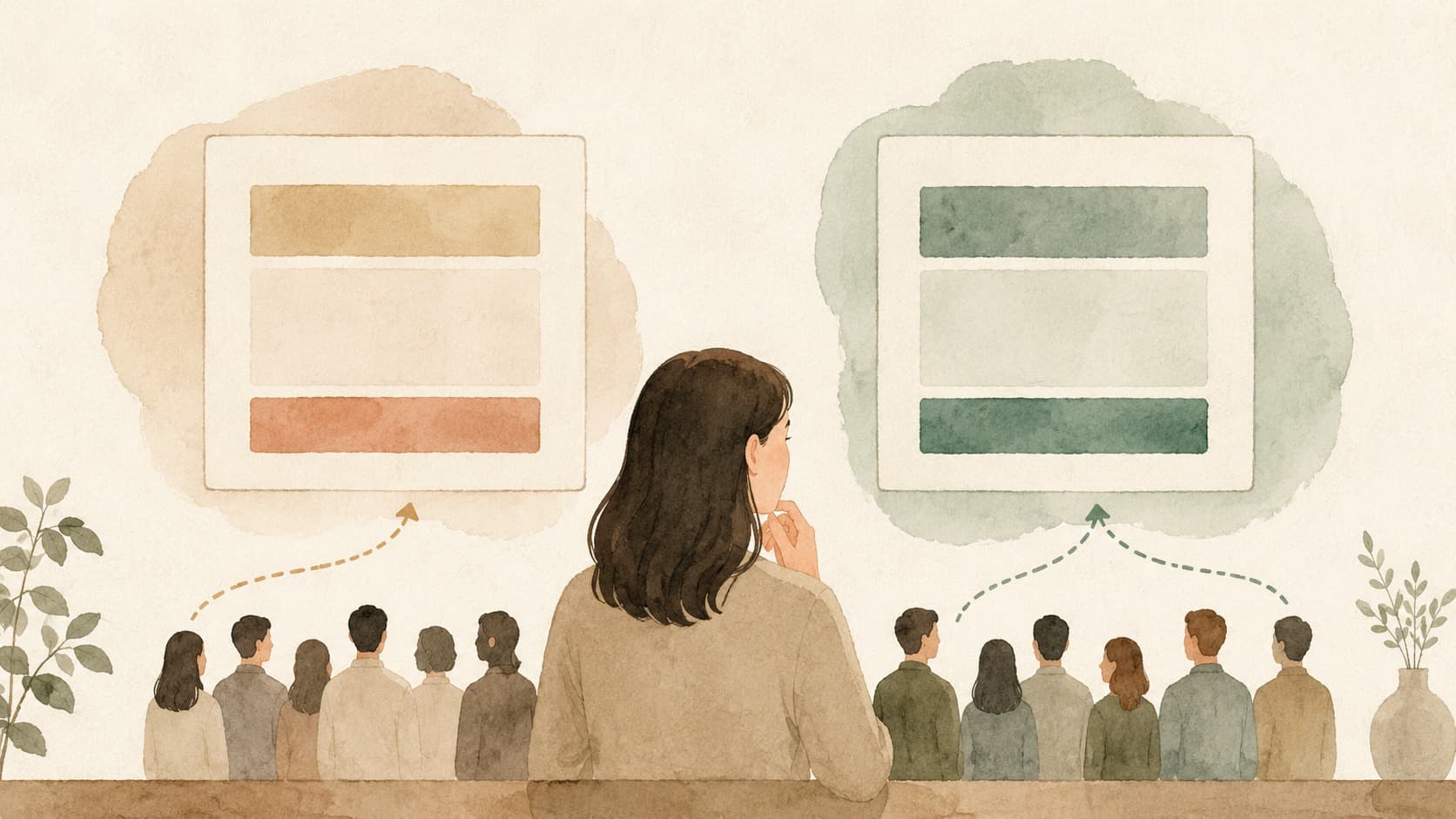
An everyday picture
Think of A/B Testing as a small habit a team agrees to keep. The single act is tiny; the value comes from everyone doing it the same way, the same week, every week.
Where it shows up
A/B Testing sits inside the everyday rhythm of building software: planning, reviews, the small decisions that pile up between releases. Done well, it shows up as a calmer week; done badly, it shows up as rework.
A small example
Imagine the scene above. The role A/B Testing plays is the one its blurb describes — Showing two versions to see which performs. When a new app feels obvious the first time you use it, ideas like this are part of why nothing got in your way.
Common misunderstanding
One line to take with you
A/B Testing is a habit. The first time costs the most; every time after that is mostly muscle memory.