
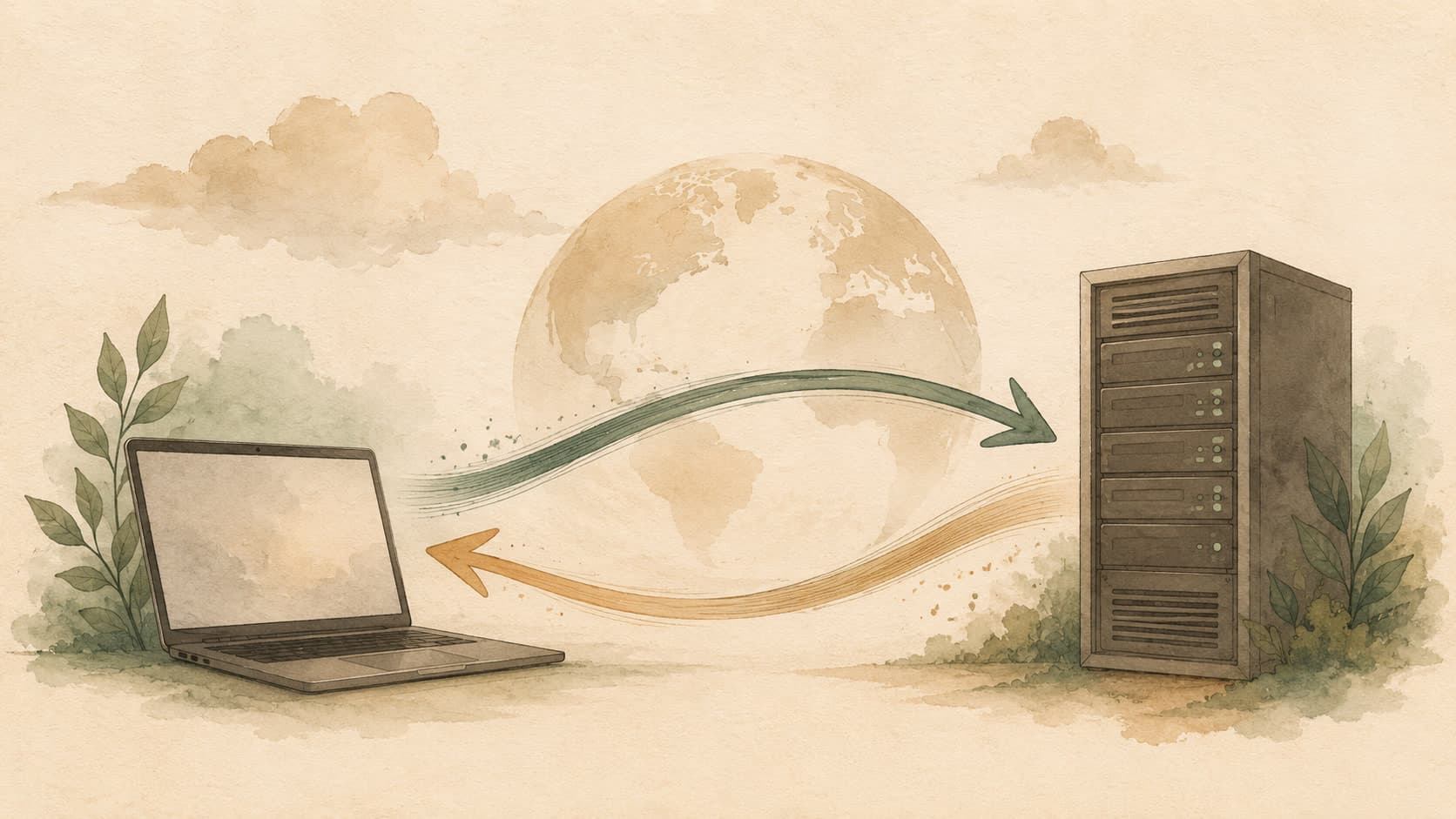
HTTP is the call and the answer that makes the web a web. A request goes out with a verb and a URL; a response returns with a status and, usually, a body. Almost every other protocol on this list sits on top of it.
In plain language
When a browser asks for a page, it sends a short note: a verb (GET, POST), a URL, and some headers. The server reads the note and sends a reply with a status code (200 means OK, 404 means not found) and usually a body of HTML or JSON. Almost everything else on the modern web — REST APIs, GraphQL, WebSockets — sits on top of this exchange.
An everyday picture
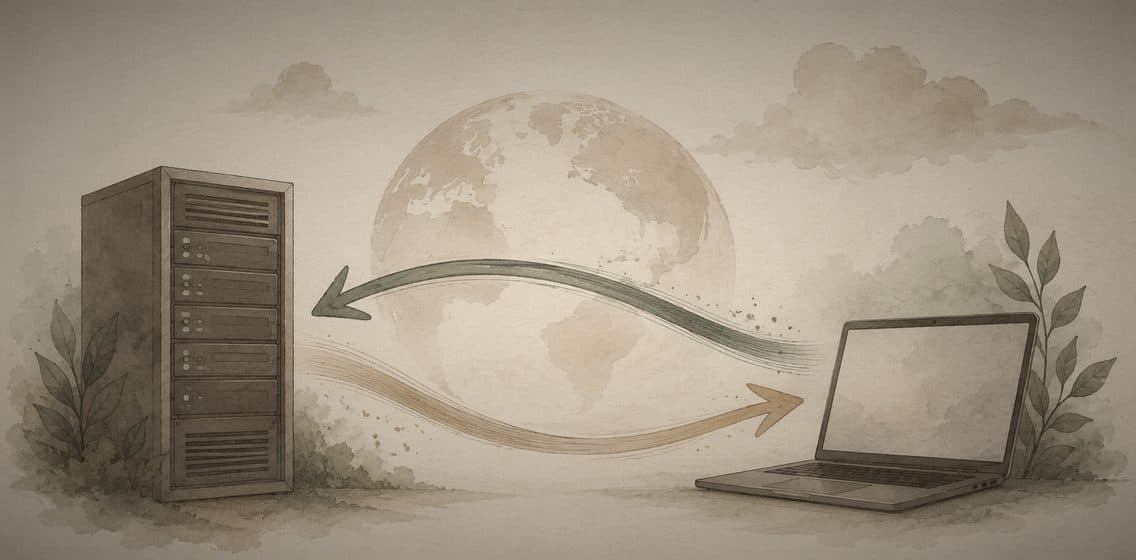
Think of HTTP as part of the doorway between a person and a machine. People see the door — the page that loads, the button that responds — and barely notice the hinges. HTTP is one of the hinges.
Where it shows up
You meet HTTP in almost every website, app, and dashboard. The piece itself is invisible; what you notice is the page that loads, the field that updates, the screen that fits the phone in your hand.
A small example
Typing 'lumo-mate.com' in your address bar sends an HTTP GET request to the server, which replies with the HTML for the home page.
Common misunderstanding
One line to take with you
HTTP is part of the surface between people and machines. The user sees the result, never the seam.