
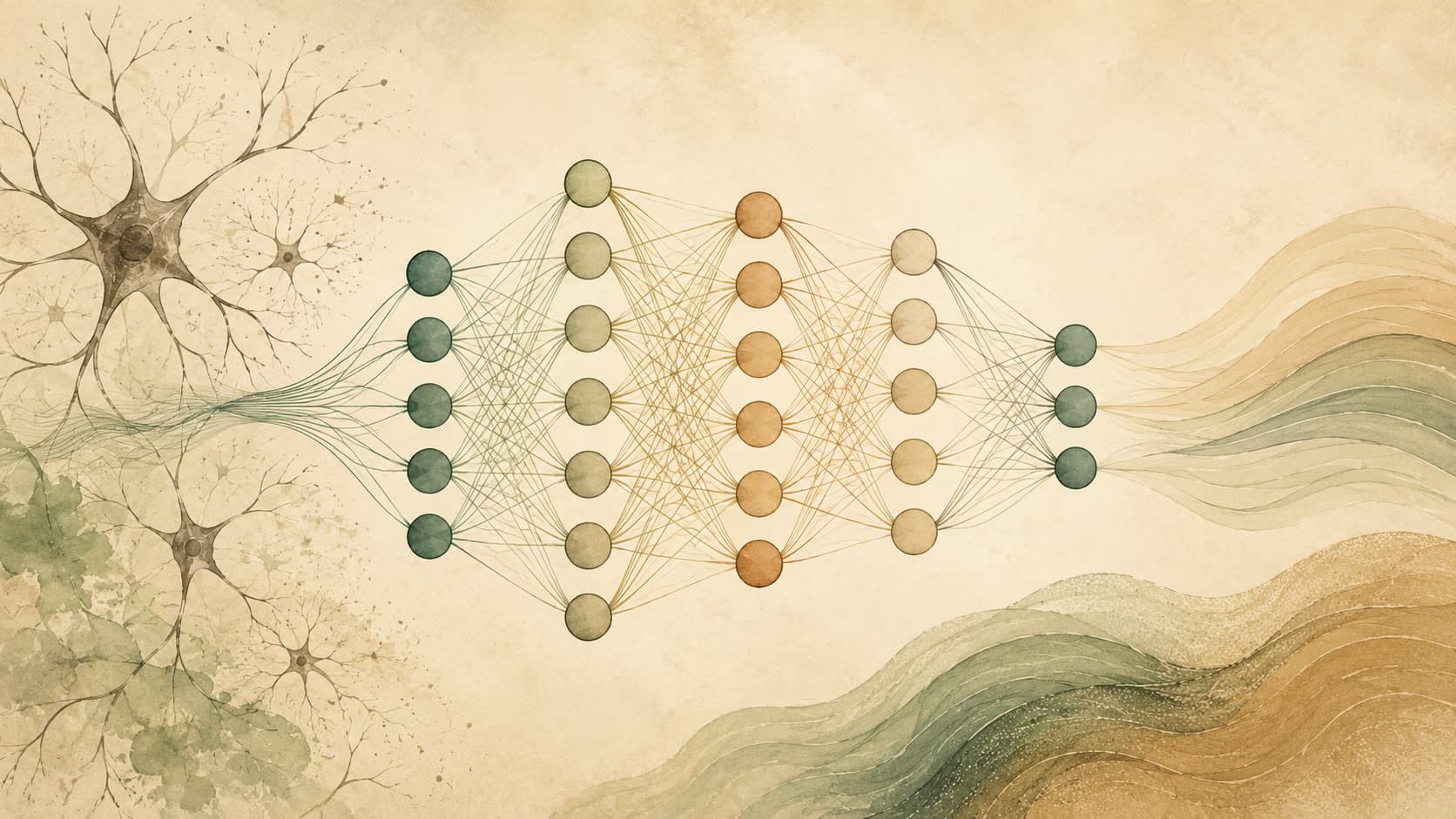
A neural network is a stack of multiplications and non-linearities. It is not, despite the name, an organ — it is a differentiable function shaped like a graph, trained by nudging its weights toward less error.
In plain language
In AI and machine learning, you will run into this term whenever someone talks about how a model is built or used. A neural network is a stack of multiplications and non-linearities. It is not, despite the name, an organ — it is a differentiable function shaped like a graph, trained by nudging its weights toward less error. If you are new to the field, the simplest mental model is this: layered weights, loosely modeled on neurons. Read it once with that frame in mind, then come back and read it again — that is usually enough for the rest of the entry to make sense.
An everyday picture
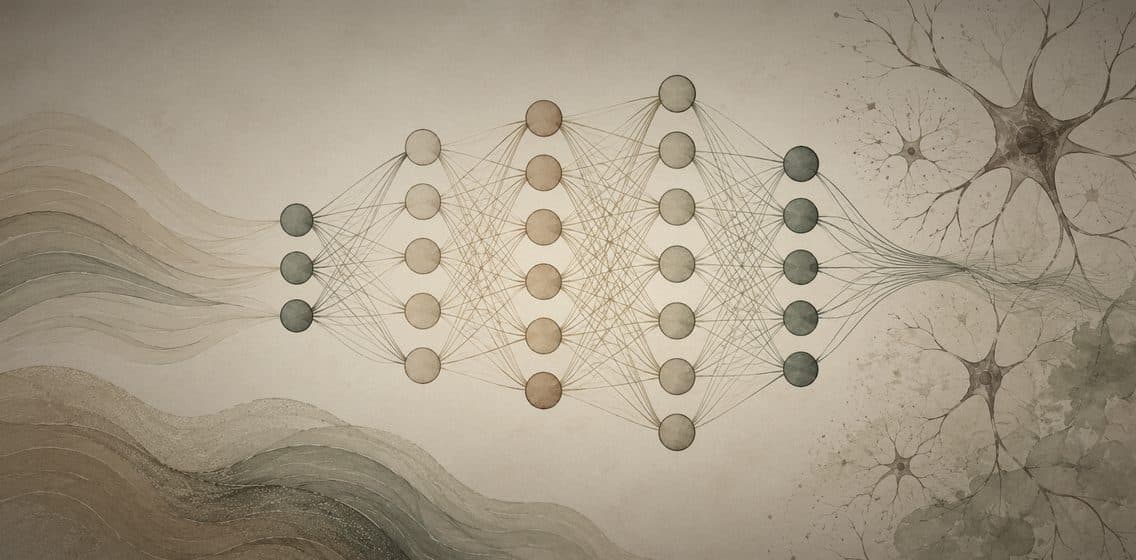
Think of Neural Network less like a thinking person and more like someone who has read an enormous amount and now finishes other people's sentences for a living. They have absorbed the shape of the work; they have not memorised any one page.
Where it shows up
Neural Network tends to sit inside products that need to read, write, or recognise without a hard-coded rule — assistants, search, document tools, voice apps. It is rarely the only moving part, but it is often the part the user feels.
A small example
Imagine the scene above. The role Neural Network plays is the one its blurb describes — Layered weights, loosely modeled on neurons. When a chatbot in a customer service portal reads a question and returns a draft reply, several of these AI ideas — model, prompt, context — are at work behind the single button you saw.
Common misunderstanding
One line to take with you
Neural Network is statistics worn well. Useful for patterns; double-check it for facts.